Description
Historical Background
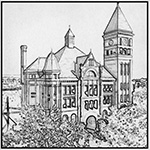
Located on Wausau’s west side at 833 South Third Avenue, the Irving School was built in 1883. It stands as one of the oldest surviving school buildings in the area. During the late 19th century, Wausau was experiencing rapid population growth driven by the booming lumber industry, which necessitated a wave of new, permanent brick schoolhouses. Irving School served generations of local students for nearly nine decades before officially closing its doors as a public educational facility in 1970.
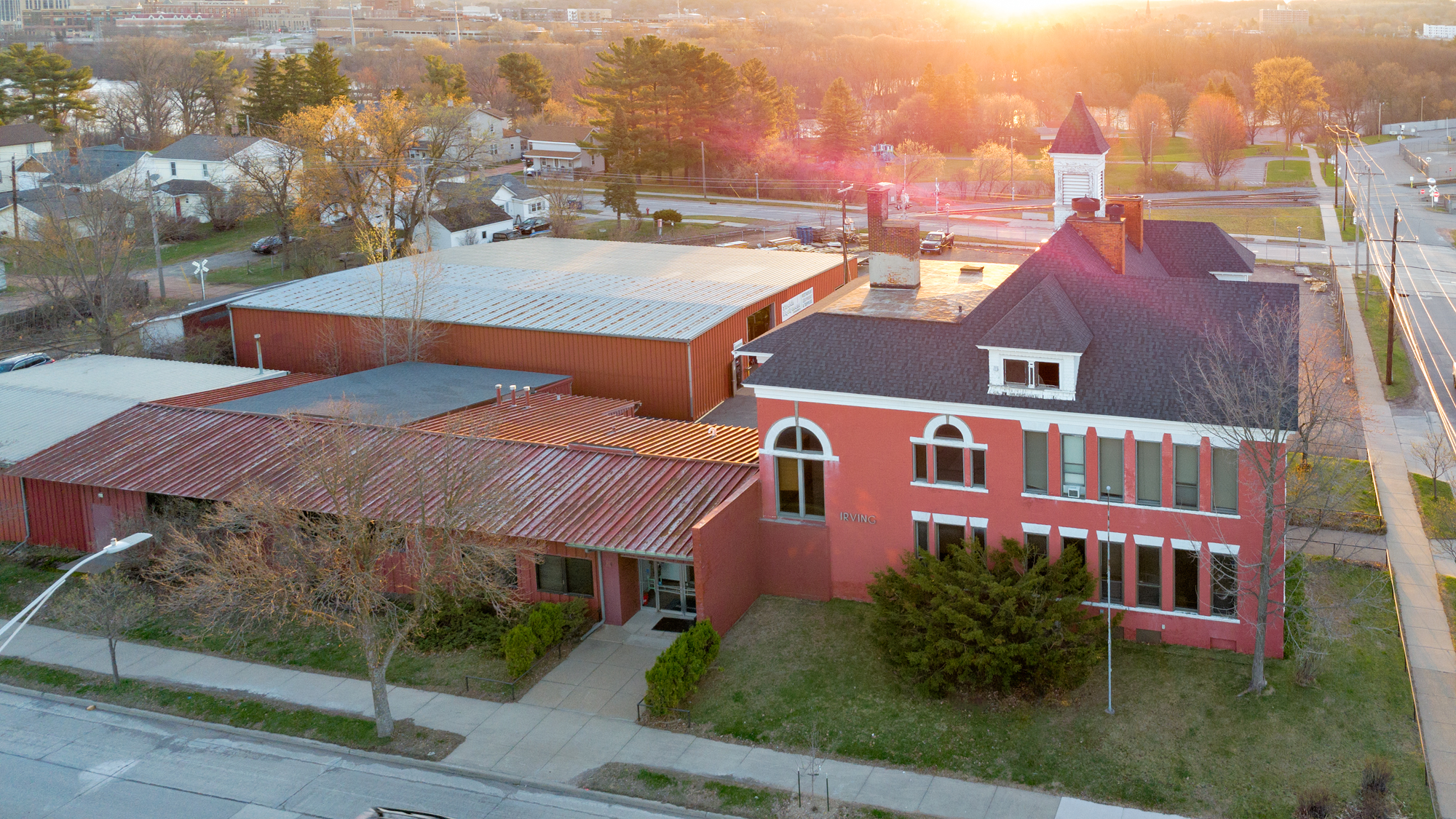
Following its closure, the building avoided demolition through adaptive reuse and was converted into commercial office space. For those actively involved in local historic preservation, the building remains a focal point of Wausau’s civic heritage. It has recently been a subject of municipal interest regarding official historic designation; however, a recent motion to landmark the property at the city’s Planning Commission stalled when it failed to receive a second.
Architectural Significance
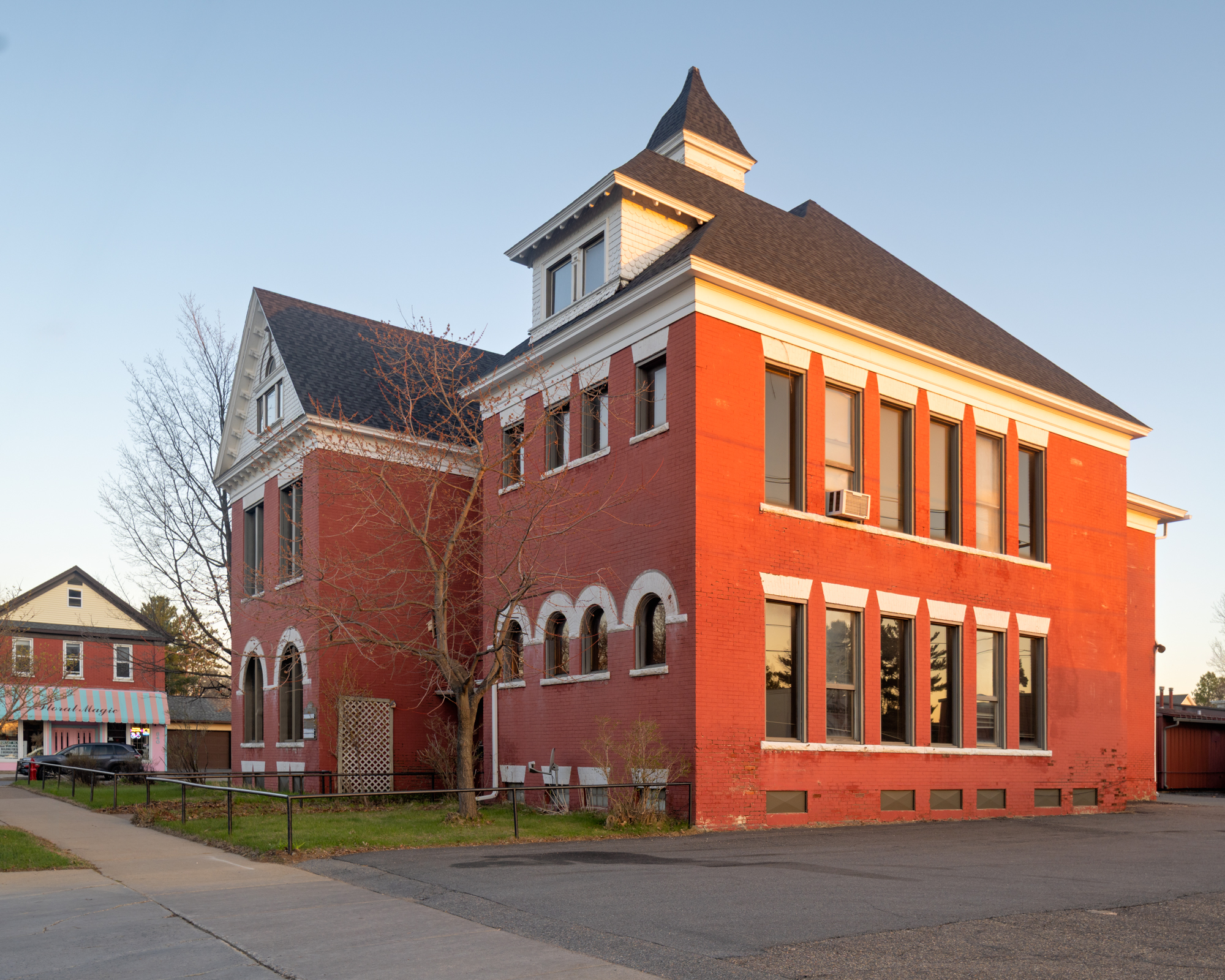
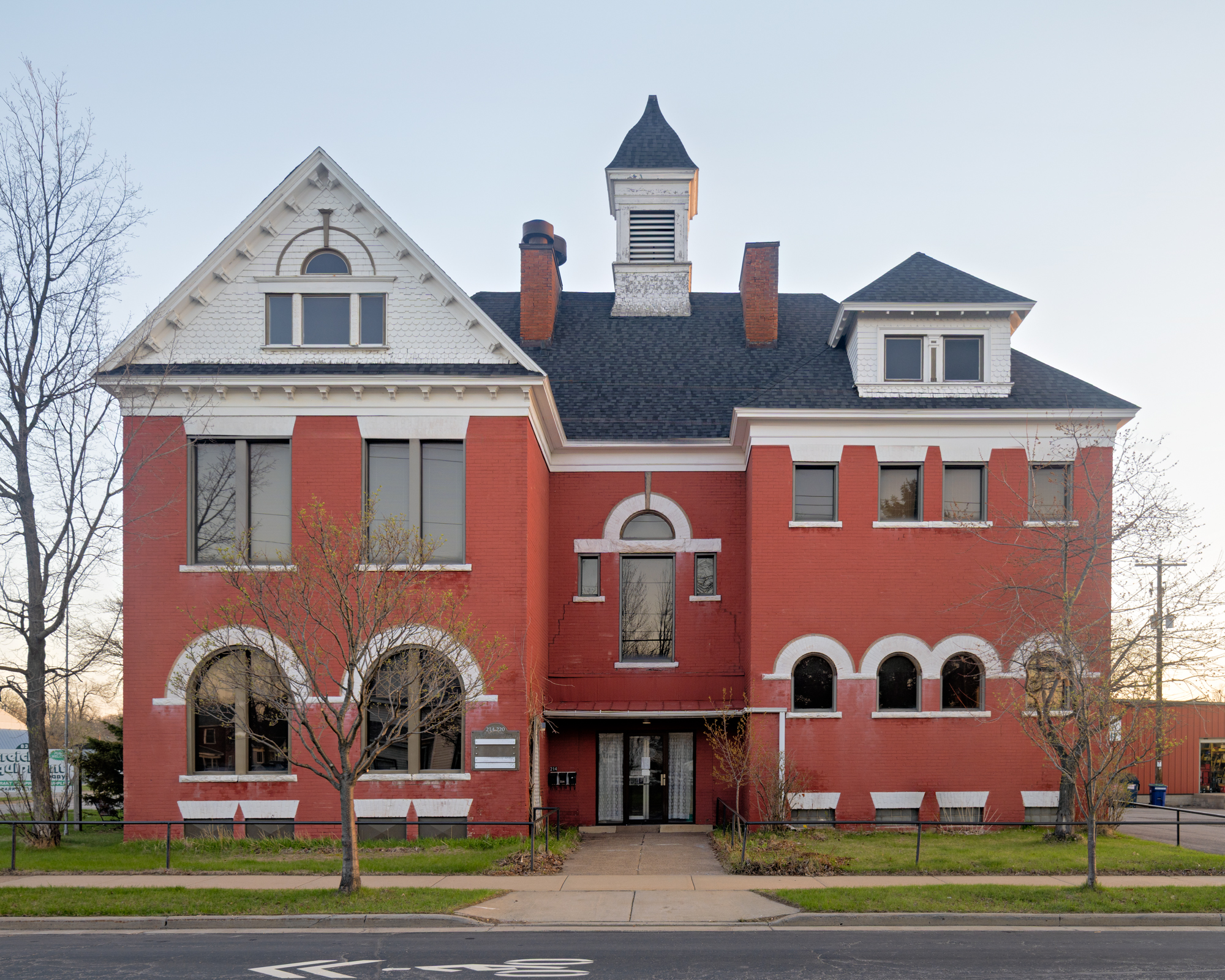
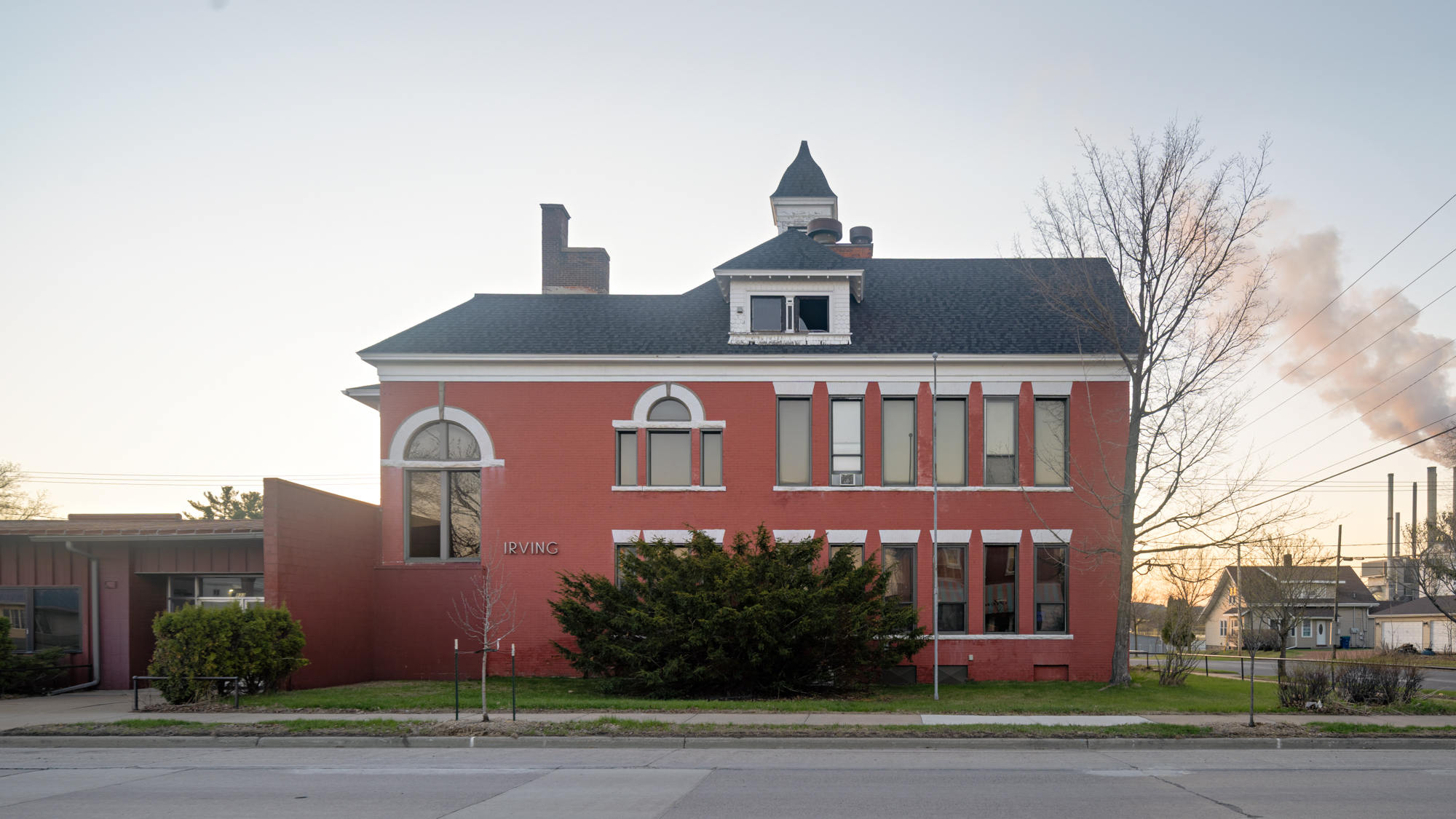
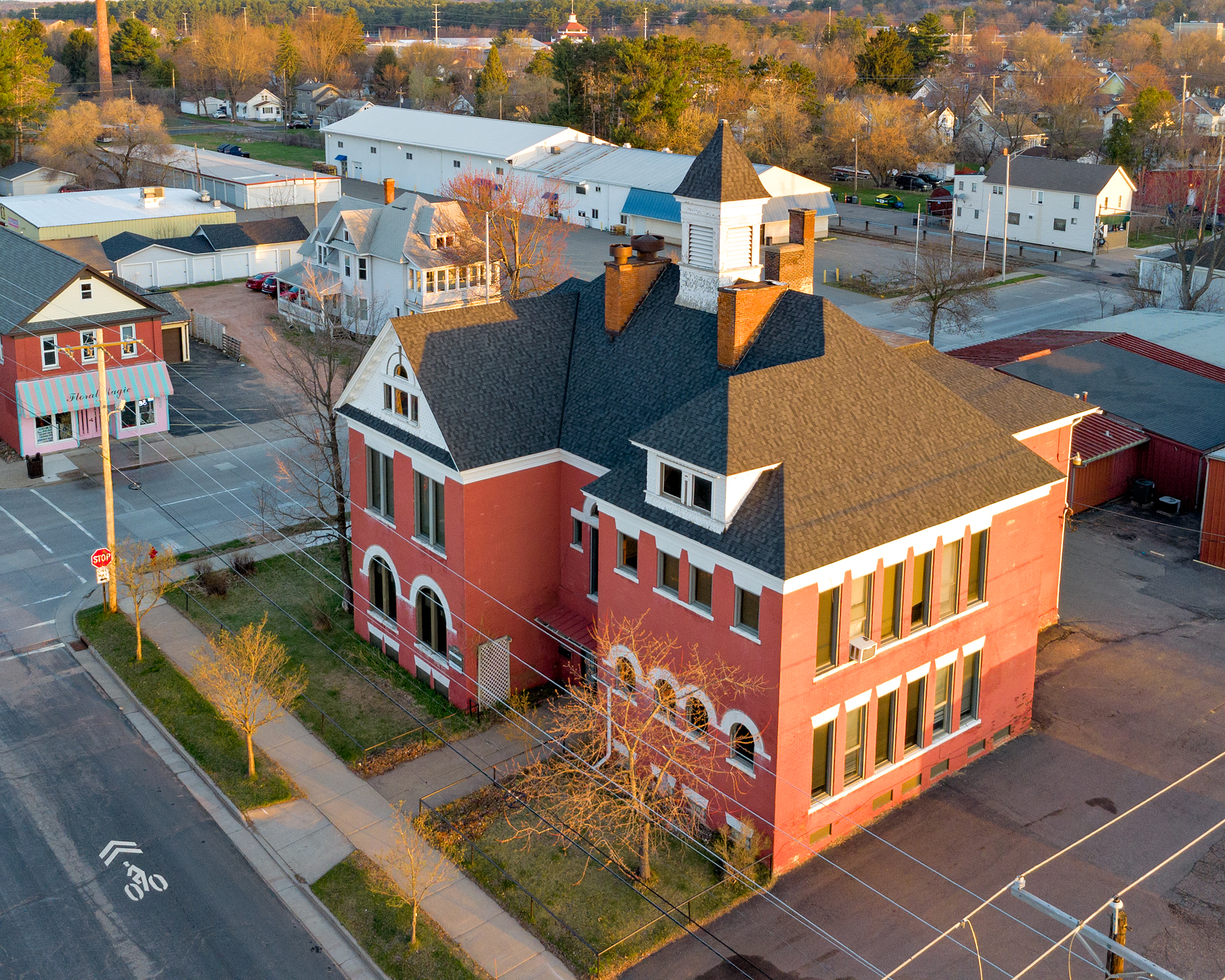
Irving School is a relatively rare and important example of Queen Anne architecture applied to an educational building in Central Wisconsin.
-
The Architect: The school was designed by prominent Milwaukee architect Henry J. Van Ryn. Van Ryn only designed two schools in Wausau—the other being the Longfellow School (built in 1894), which also survives today as the Wausau School District’s administrative building.
-
Queen Anne Elements: While many late-19th-century public schools leaned toward strict, utilitarian boxes or heavy Romanesque designs, Van Ryn’s use of Queen Anne styling gave the building a more dynamic, ornate feel. Queen Anne civic structures of this era are typically characterized by asymmetrical facades, complicated rooflines (often blending gabled and hipped elements), and varied masonry textures that catch the light.
-
Functional Design: Beyond pure aesthetics, the architectural framing allowed for large, closely spaced windows. Long before modern, reliable indoor lighting, architects had to maximize natural sunlight. This generous fenestration not only defined the building’s exterior rhythm but served an essential functional purpose for the students reading and writing inside.
Today, the building provides a direct architectural link to Wausau’s foundational years and remains an excellent subject for photographic documentation and historical study.
Address
220 Sherman St, Wausau, WI 54401